The short version
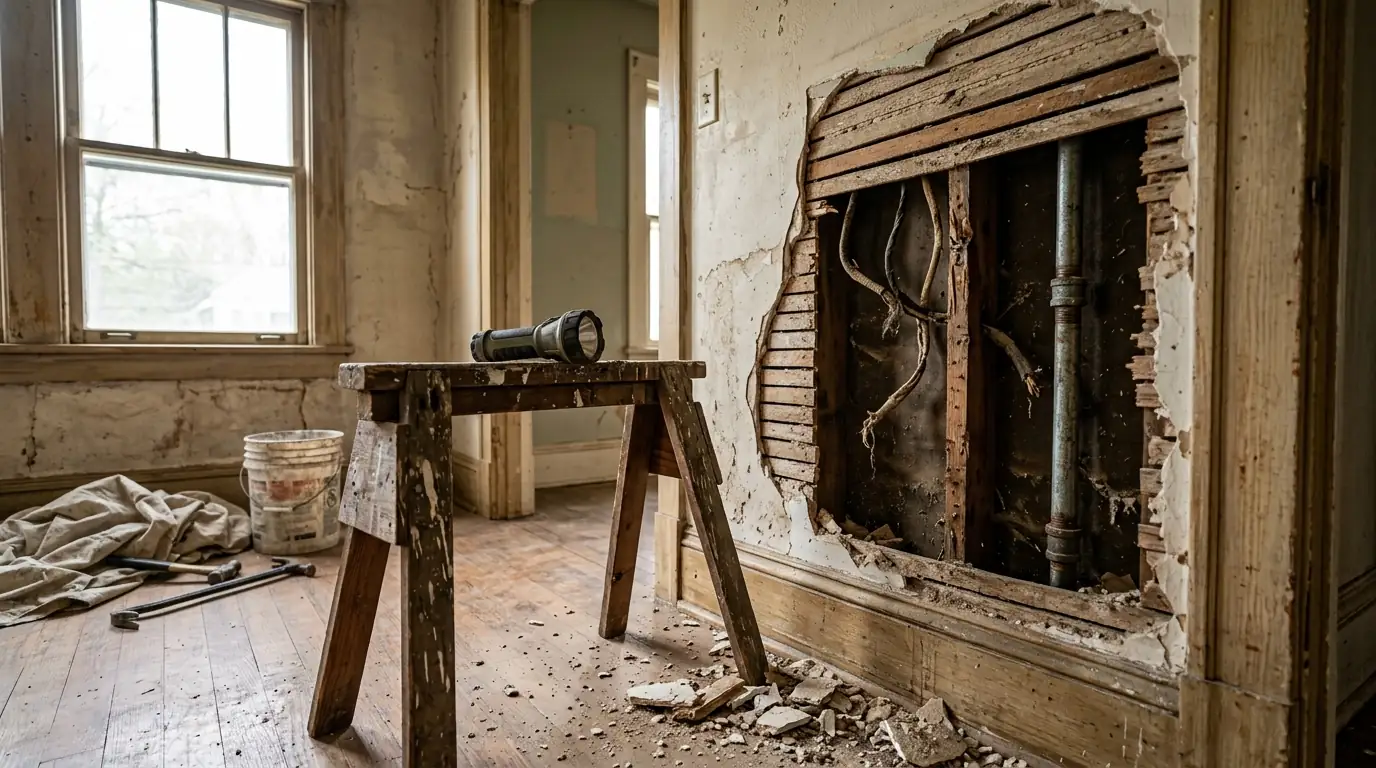
Point2Homes' reading of ACS 2019-2023 data shows about 42.7 percent of Greensboro homes were built before 1980, including roughly 9.8 percent before 1950. Before planning a remodel in one, test for lead paint if it predates 1978, look for galvanized or lead pipe on the private side, and find out what the wiring is.
How old is the typical Greensboro house?
Older than many people assume, and younger than the historic districts suggest. Point2Homes, using ACS 2019-2023 estimates, puts the median Greensboro home's build year around 1985. About 42.7 percent of units were built before 1980, and roughly 9.8 percent before 1950. The city's building boom ran from the 1980s through the 2000s, and only 1.3 percent of homes date from 2020 or later.
Each era leaves its own fingerprints. Block Renovation's 2026 Greensboro guide points to the 1920s and 1930s homes near UNCG and downtown and the mid-century ranches and split-levels of Starmount Forest and Guilford Hills, noting that these houses often hide outdated wiring and cramped kitchens at the back. Preservation Greensboro's history of Lindley Park describes bungalows, English cottages, Minimal Traditional homes and early ranches side by side there, because building slowed through the Depression and the war and modest veteran housing followed from 1945.
The largest single group is not the oldest. Houses from the 1980s, 1990s and 2000s make up a big share of the city, and they come with their own set of issues: they are past the lead paint and lead plumbing cutoffs, but their original windows, tubs, shower pans, builder-grade cabinets and early vinyl floors are reaching the end of their working lives at roughly the same time.
The table below shows how the city's housing breaks down by age. Find your house's decade, then read the sections that follow with that era in mind.
| When built | Share of Greensboro housing units |
|---|---|
| Before 1950 | about 9.8% |
| Before 1980 (includes the row above) | about 42.7% |
| 1980 to 1989 | about 15.6% |
| 1990 to 1999 | about 14.4% |
| 2000 to 2009 | about 15.2% |
| 2020 or later | about 1.3% |
Lead paint: what to know if your house was built before 1978
If your house predates 1978, assume painted surfaces could contain lead until a test says otherwise. Greensboro has taken this seriously enough that the City, working with UNCG, has run a HUD-funded Lead Safe Housing Program that reduces lead hazards at no cost for income-qualified owners of pre-1978 homes where young children live or visit. If that describes your household, check whether the program is taking applications before you plan a remodel.
For a remodel, lead changes how the work is done more than whether it is done. Sanding, scraping, cutting and demolishing painted surfaces release dust, so the work area is contained, dust is controlled at the source, and cleanup is thorough before the space is reopened. Windows, doors and trim deserve the most attention, because friction and wear on painted parts are what turn old paint into dust.
Plan the test early. Knowing whether lead is present shapes the containment, the schedule and sometimes the scope itself, since it can make more sense to replace a heavily painted component than to strip it in place.
Galvanized and lead pipe on the private side
Greensboro has about 112,000 water service lines and, in its field checks, has found no lead service lines. That covers the city side. The city also notes that lead plumbing was banned only in 1986, so older buildings may still have lead or galvanized pipe on the private side, inside the walls and under the house.
Galvanized steel supply pipe corrodes from the inside, which tends to show up as low water pressure, rusty water after the tap has sat, or a leak at a threaded joint. If a remodel is opening walls or working in the crawl space anyway, that is the cheapest moment to replace old supply lines. In Greensboro, replacing a water service, working on drain, waste and vent piping, or connecting fixtures needs a plumbing permit, so the work fits naturally into a permitted kitchen or bath job.
Look under the house and at the water heater for clues. Gray threaded pipe with fittings at every joint is usually galvanized; copper or plastic lines show the house has already been at least partly repiped.
Call (336) 347-1995Questions about your own house? Call any hour and talk it through.
Greensboro's soft water and what it means for new fixtures
Greensboro's water is soft. The city's October 2024 water quality report lists finished-water total hardness of 51 mg/L from the Townsend plant and 34 mg/L from the Mitchell plant, with a pH of about 8.1 at both.
For a remodel, that is mostly good news. Soft water is gentler on faucet cartridges, shower valves and glass than hard water, and a softener is rarely the first thing a house on city water needs. If you do plan to add one, note that the city requires a plumbing permit to add equipment such as a water softener. Houses on private wells outside the city are a different case, and well water should be tested on its own terms before fixtures are chosen.
Wiring, framing and floors: what else to check before you plan
Plumbing and paint are not the only things that age. Before a design is drawn, an older house deserves a walk-through that looks at the bones as well as the room you want to change.
Each item on that list changes the plan. A panel without spare capacity means an upgrade before a new kitchen can run. A load-bearing wall means a beam, and in Greensboro structural work always needs a building permit; our load-bearing wall removal page covers that work. A damp crawl space means fixing moisture before new floors go down, which our guide to soft floors over crawl spaces explains in detail.
- The electrical panel and the type of wiring, and whether there is room for the new circuits a kitchen or bath will need.
- Any wall you hope to remove, to see whether it carries load from above.
- The crawl space: moisture, sagging, and signs of termites or old water damage.
- Floors near tubs, toilets and the kitchen sink, where slow leaks soften subfloor.
- Windows and exterior trim for rot, especially sills and the bottoms of door jambs.
- Whether the house sits in College Hill, Dunleath or Fisher Park, where exterior work needs design approval first.
How to plan a remodel in an older house without nasty surprises
The difference between a smooth remodel and a stressful one in an older house is usually when the problems are found. Found before the plan, they are line items. Found after demolition, they are change orders. That is why we ask to see the attic, the crawl space and the panel on the first visit, not just the room you want to change.
For bigger projects, it often makes sense to phase the work: deal with wiring, plumbing and floor structure across the house while walls and floors are open, then finish rooms in the order you need them. Our whole-house remodeling work is built around that kind of sequencing. If the house is in one of the local historic districts, our historic home renovation work and the historic districts guide cover the extra step.
Older houses reward patience. The plaster, the trim and the old oak floors that make them worth remodeling are also the things that are hardest to put back once they are torn out, so a plan that keeps what is good and fixes what is failing usually beats a plan that starts from a blank wall.
A pre-planning checklist you can do yourself
You do not need a contractor to start. A flashlight, a phone camera and an hour will tell you a lot about what a remodel is likely to run into, and the photos make the first conversation far more useful. Call any hour once you have them.
- Find the year the house was built, from your closing papers or the county's property records.
- Photograph the electrical panel with the door open.
- Look at the pipes where they enter the house and at the water heater.
- Shine a light into the crawl space and photograph anything wet, stained or sagging.
- Press on the floor around each toilet and tub for soft spots.
- Note any windows that stick, rattle or show soft wood at the sill.
Sources
- Greensboro, NC demographics - Point2Homes (citing ACS 2019-2023 5-year estimates)
- Kitchen Remodeling In Greensboro, NC: Costs and Localized Design - Block Renovation
- The Secrets of Lindley Park - Preservation Greensboro
- UNCG Partners with City for Lead Safe Housing Program - UNCG Research (Feb 25, 2019)
- Lead and Copper Compliance Program - City of Greensboro Water Resources
- City of Greensboro water quality monthly inorganic averages report (October 2024)
- Building Permits FAQs - City of Greensboro
- Residential Construction - City of Greensboro Engineering and Inspections
- Greensboro Historic District Program - City of Greensboro