Short answer
We build additions and remodel homes across Forsyth County, from Winston-Salem out to Clemmons and Kernersville. The figure that frames most of these projects is a median build year of 1984: plenty of houses here have good bones and a floor plan that no longer fits the household living in it, so adding space often beats moving.
Why adding on often beats moving in Forsyth County
Census QuickFacts counts 101,645 owner-occupied homes in the county, an ownership rate of 63.6 percent; the median owner-occupied home is worth $250,400. Those owners face a choice when the house gets tight: sell and buy, or build. A bedroom and bath addition, a family room bump-out or an in-law suite keeps the school zone, the neighbors and the lot they already like. The county issued about 2,875 building permits in 2025, so plan early.
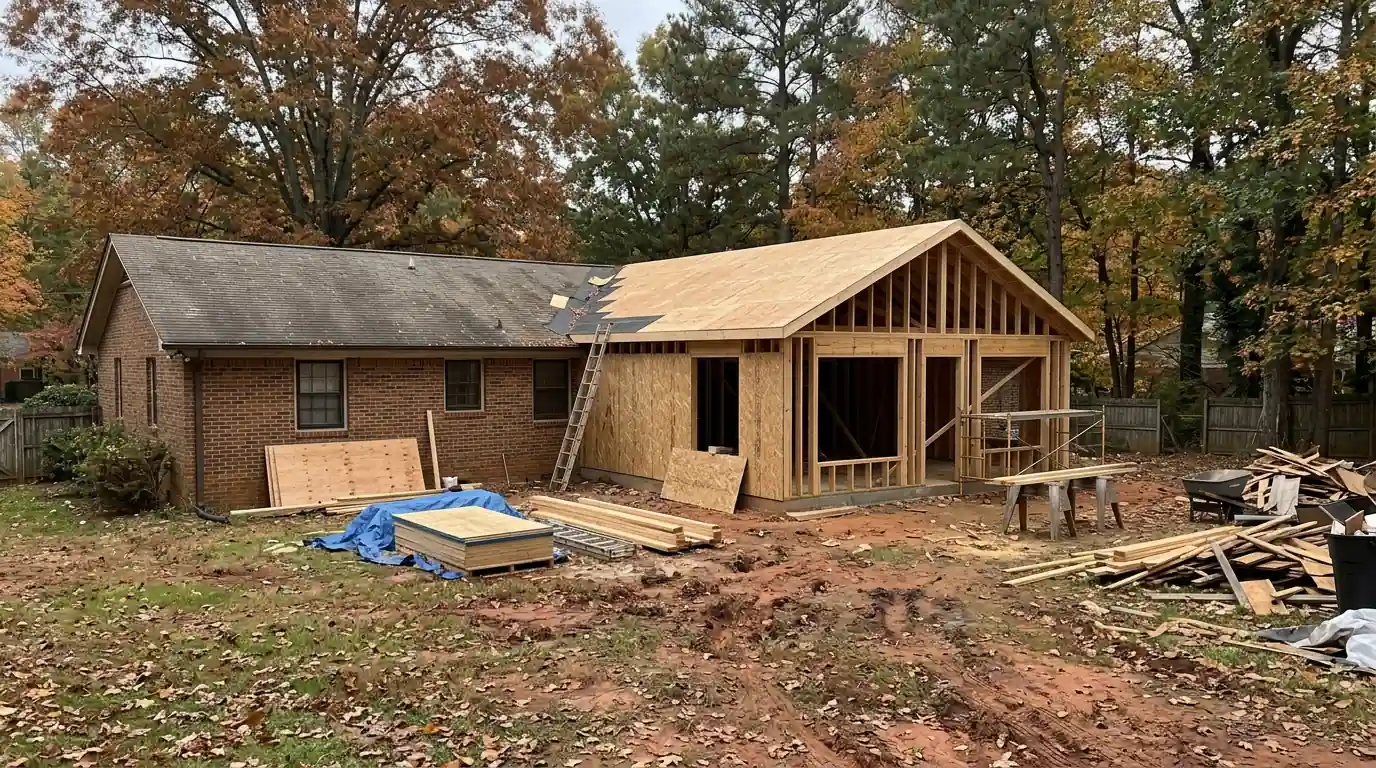
Tying new rooms into a mid-1980s house is mostly about the connections. We set the new floor at the same height as the old framing, extend the roof so the ridge and shingles line up, and decide up front whether the existing heating and cooling can carry the added square footage. The state residential code sets a 12-inch minimum depth below undisturbed soil for the new footings.
Sunrooms worth using around Belews Lake and Tanglewood
Belews Lake and Tanglewood Park are both listed among county features, and both say the same thing about the people here: they like being outside. The Triad climate makes a three-season room a judgment call. Normals at Piedmont Triad International Airport show an average July high of 88.5 F and a January low of 30.1 F, so a room with no heating or cooling sits idle at both ends of the year. A four-season sunroom tied into the HVAC costs more but gets used every month.
Who handles permits in Winston-Salem and the smaller towns?
Forsyth is split among Winston-Salem, Kernersville, Clemmons, Lewisville, Walkertown, Rural Hall and other towns, plus unincorporated land, so the right permit office depends on where the lot sits. We confirm with the town or the county before drawings go in. An addition always involves structural framing, and the state's small-job exemption in G.S. 160D-1110 does not reach structural changes, added plumbing or new wiring, so plan on a building permit and inspections at each stage.