Short answer
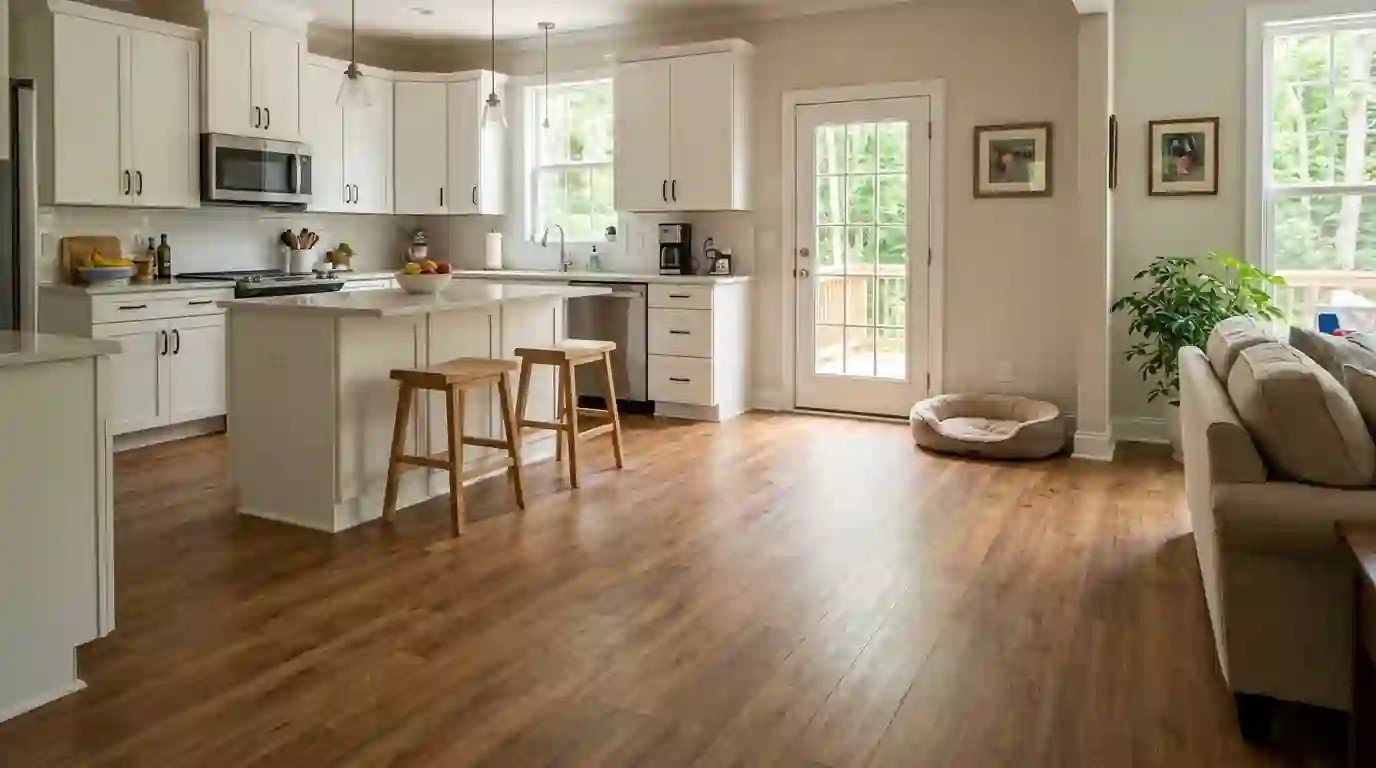
In Greensboro, luxury vinyl plank runs $4 to $16 per square foot in Fixr's local remodel guide, and the subfloor decides whether it lasts. LVP shrugs off water on top but shows every dip below, so we flatten the subfloor before installing click-lock or glue-down plank in kitchens, baths and basements.
LVP solves real problems: spills in kitchens and baths, pets, and basements where wood would not survive. It also has limits worth knowing before you buy. Thin planks show subfloor bumps, click joints can separate over dips, and heavy fridges and islands can pin a floating floor so it buckles in summer.
We match the product to the room. A rigid-core click plank suits most living areas; a glue-down plank suits rooms with heavy fixed loads or big temperature swings. Either way, the old floor comes up or gets checked, the subfloor is flattened, and transitions are planned before the first plank goes down.
What moves the price of luxury vinyl plank flooring
Fixr prices LVP per square foot installed, locally and nationally; prep is the part that varies most.
- Plank quality Thicker wear layers and rigid cores cost more.
- Subfloor prep Leveling, patching and screwing down panels add labor.
- Old floor removal Tile or glued vinyl takes longer to remove than carpet.
- Rooms and transitions Baths, stairs and doorways add cuts and trim.
| What the figure covers | Published range | Source |
|---|---|---|
| LVP, Greensboro line item | $4-$16 per sq ft (LVP); bathroom page lists $4 to $15 per sq ft | Fixr - Greensboro NC kitchen remodel cost guide (Dan Simms) |
| LVP installed, national | $3 to $16 per sq ft installed (most pay $5 to $12); labor $1.50 to $6 per sq ft | Luxury Vinyl Plank Flooring Cost - Fixr (Adam Graham) |
Published figures are averages from the sources named, not a quote. Your price comes after the walk-through.
Click-lock or glue-down LVP
| Type | Install | Best for |
|---|---|---|
| Click-lock | Floats over underlayment | Living areas and bedrooms |
| Glue-down | Bonds to the subfloor | Heavy islands, sunny rooms, rentals |
| Hardwood instead | Nailed or glued | Rooms you may refinish later |
Installing LVP yourself
Click-lock plank is one of the friendlier DIY floors, and many homeowners do a bedroom over a weekend. The common mistakes are skipping subfloor leveling, pinning the floor under cabinets or door jambs, and leaving no gap at the walls. In a bath, resetting the toilet means a new wax ring and care at the flange. If the floor feels soft anywhere, look under it before covering it.
Click-lock LVP as a floating floor
Click-lock plank snaps together edge to edge and floats over an underlayment rather than being fastened down. It goes in quickly and can cover a whole level without breaks if the product allows it. It needs expansion space at the walls and should not be pinned under kitchen cabinets or islands, or it cannot move with the seasons. Fixr's Greensboro guide lists LVP at $4 to $16 per square foot, and Fixr's national data says most homeowners pay $5 to $12.
Glue-down LVP for heavy loads and sunny rooms
Glue-down plank is thinner and bonds directly to a flat subfloor, so it does not shift under heavy fixed loads like islands, or in rooms with big sunny windows where floating floors can expand. It takes more subfloor prep, since every flaw telegraphs through the thin plank, but single damaged planks can be replaced. We roll each section after setting so the adhesive grabs fully. Fixr's national figures put LVP labor at $1.50 to $6 per square foot, on top of materials.
LVP in kitchens, baths and basements
Water resistance matters most in these rooms, and LVP is the usual answer. In a kitchen we install before or after the cabinets depending on the product's rules. In a bathroom we pull the toilet, install around the flange and seal the edges at the tub. In a basement we check the slab for moisture first, because water-resistant plank over a damp slab can still trap moisture beneath it. A water-resistant surface does not make the subfloor waterproof, so a leak under it still needs a fast response.
Leveling the floor before the plank goes down
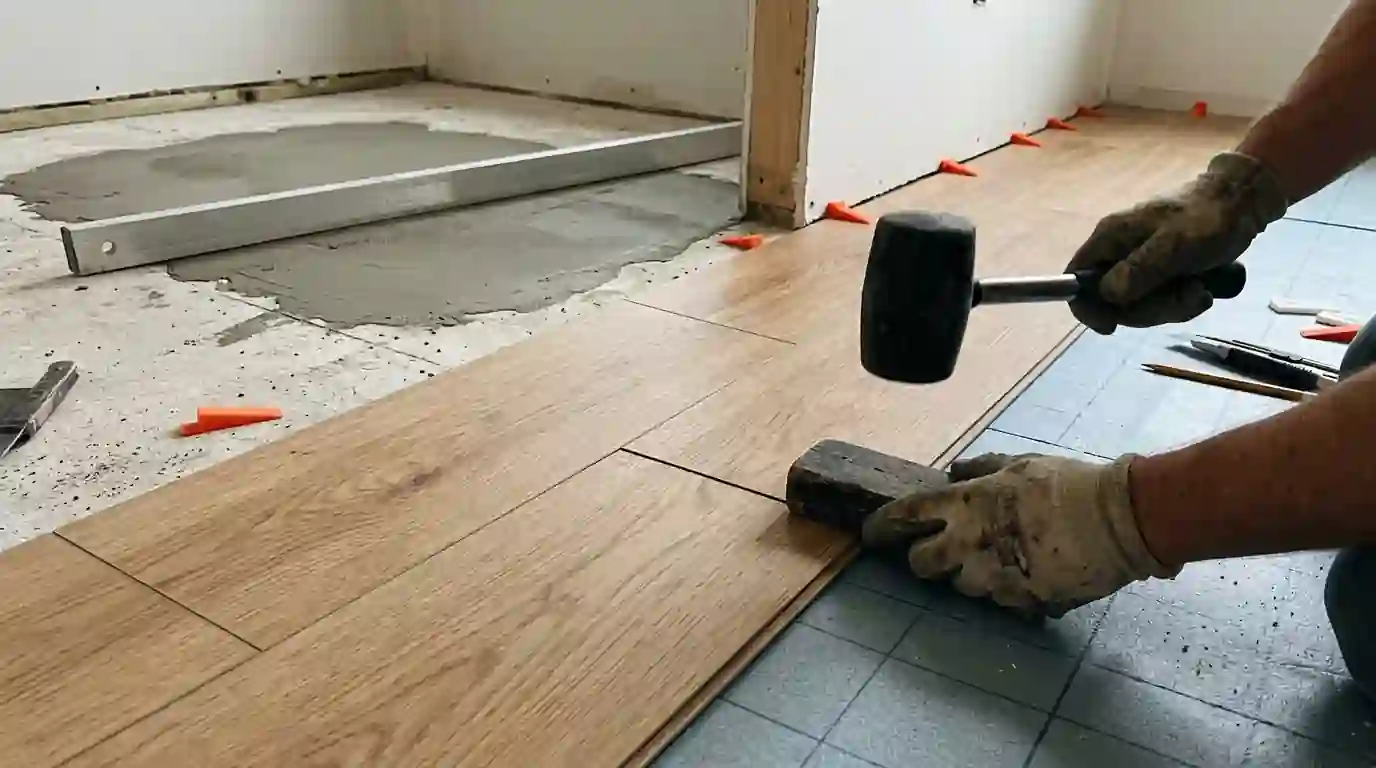
Most LVP failures we see trace back to the subfloor. Planks need a flat surface within the manufacturer's tolerance, usually tighter than people expect. We find high spots with a long straightedge, grind or plane them down, fill low spots with patch or self-leveling compound, and screw down squeaky panels. Over a crawl space, a soft spot gets inspected from below, since new plank over rotted subfloor only hides it. Skipping this step is the false saving we see most. See subfloor repair for that work.
Call (336) 347-1995Want someone to look at your room? The phone is answered around the clock.
Remodeling this in Greensboro houses
Greensboro is close to an even split between owners and renters: Census QuickFacts puts the owner-occupied housing rate at 50.5 percent for 2020 to 2024, with a median owner-occupied home value of $244,800. Both halves of that split want the same thing from a floor. Landlords turning over units need something durable that goes in fast, and owners updating a house at that value want a floor that handles kids and pets without the cost of hardwood.
How we run the job, step by step
- Check the subfloorFlatness, soft spots and moisture, from the crawl space too.
- Remove the old floorCarpet, vinyl or tile comes up.
- Level and patchHigh spots ground down, low spots filled.
- Install plankClick or glue-down, with expansion space at the walls.
- Trim and transitionsShoe molding, thresholds and stair nosings.