Short answer
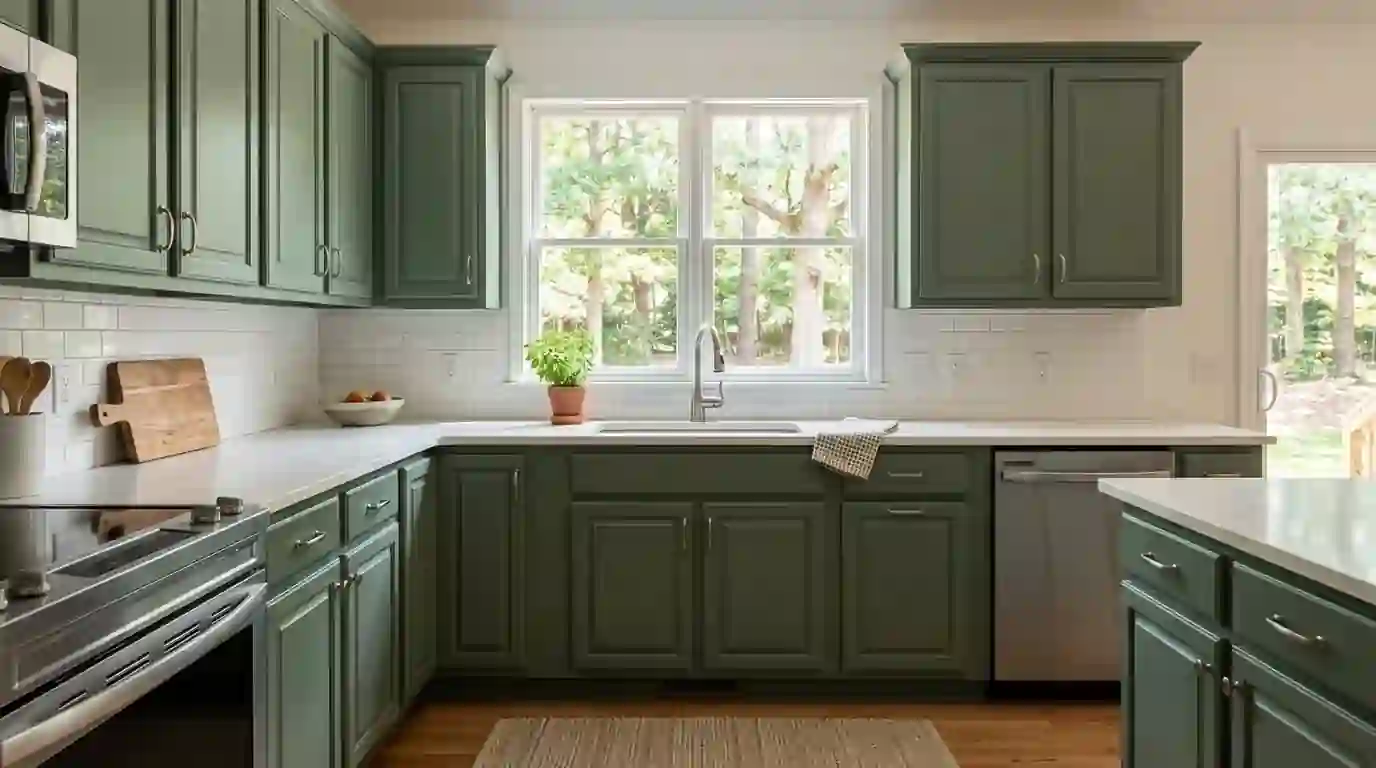
In Greensboro, painting kitchen cabinets is the lowest-cost way to change their color, and HomeGuide's national range for professional work is $2,000 to $6,500 for an average kitchen. We remove doors, degrease, sand, prime with a bonding primer and spray, so the finish lies flat without brush marks.
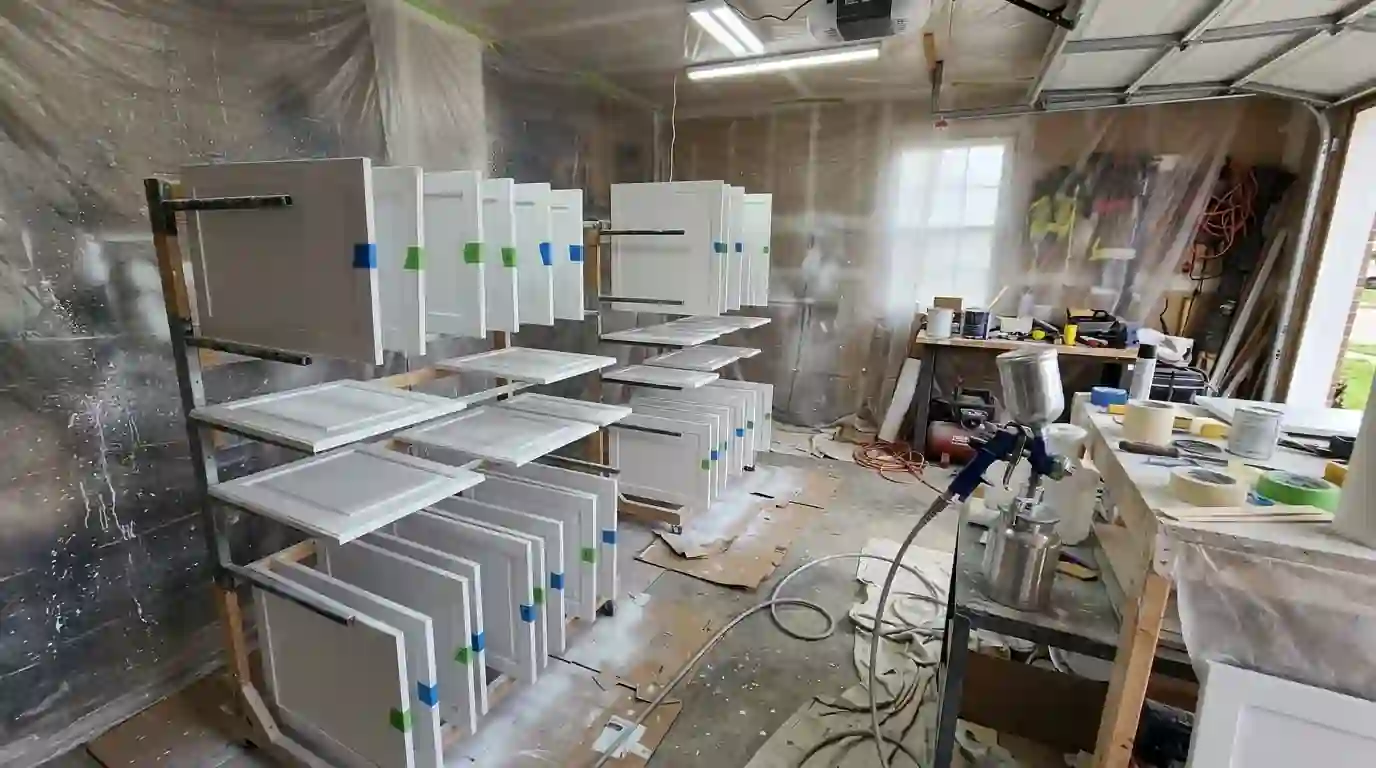
Cabinet paint fails at the prep, not the topcoat. Kitchen doors carry years of cooking grease, and paint over grease peels at the pulls within months. We take doors and drawer fronts off, label them, degrease every surface, scuff-sand, fill dings and prime before any color goes on. The boxes are masked and sprayed in place.
We use cabinet enamels that cure hard rather than wall paint. That cure takes time, so we tell you how long to treat the doors gently once they are back on. Hinges get cleaned or replaced, and we rehang and adjust every door so the reveals line up evenly across the run.
What moves the price of cabinet painting
Cabinet painting is priced per door or per linear foot, and prep is most of the labor.
- Door count Each door and front is cleaned, sanded, primed and sprayed on both sides.
- Grain filling Filling oak grain adds coats and sanding to every face.
- Number of colors Two-tone work adds masking and a second spray setup.
- Old finish condition Peeling paint or damaged veneer is stripped or repaired first.
| What the figure covers | Published range | Source |
|---|---|---|
| Cabinet painting, national average | $2,000 to $6,500 (average kitchen); $30 to $70 per linear foot; $70 to $125 per door | How Much Does It Cost to Paint Kitchen Cabinets? - HomeGuide |
Published figures are averages from the sources named, not a quote. Your price comes after the walk-through.
Should you paint your own cabinets?
Plenty of homeowners try it. The usual failures are skipped degreasing, wall paint that never cures hard and brush marks on door faces. In a house built before 1978, sanding old painted cabinets can raise lead dust, so test first. If you take it on, remove the doors, degrease twice, use a bonding primer and cabinet enamel, and let it cure.
Painting oak cabinets without the grain showing through
Golden oak from the 1980s and 1990s is the cabinet we paint most. Oak has open grain that shows through paint as a pattern of small pits, which some people like and most do not. We strip off the grease, sand the old finish dull, then decide with you whether to fill the grain or let it show. HomeGuide prices professional cabinet painting at $30 to $70 per linear foot, or $70 to $125 per door, nationally, and filled grain lands toward the top.
Two-tone kitchens and a painted island
Painting the island or the lower cabinets darker than the uppers is a common way to make a long run look lighter. It means two color setups and more masking, so it costs more than one color throughout. We spray both colors on a sample door and look at it in the room's daylight before committing. A painted island against stained perimeter cabinets also works, and it is a sensible first step when you are not ready to paint the whole kitchen.
Painting bathroom vanities to suit the kitchen
Vanities get the same process as kitchen boxes, with more attention to moisture. We check the sink base for swelling or a soft floor before painting, since paint over water damage only hides it for a while. Doors come off and get sprayed with the kitchen run when the colors are the same. A single vanity often fits into the same visit as a kitchen, which keeps the setup cost down. Pulls and hinges are usually replaced too, because old brass hardware looks out of place on fresh paint.
Grain filling for a smooth painted finish
If you want painted oak to look like painted maple, the grain has to be filled. We apply a grain filler or several coats of high-build primer, sanding between coats until the surface is flat, then prime and topcoat. It roughly doubles the prep on every door face, and the price reflects that. Maple, birch and MDF doors do not need it, since they are already close-grained. We finish one sample door each way so you can see both before choosing.
Call (336) 347-1995Want someone to look at your room? The phone is answered around the clock.
Remodeling this in Greensboro houses
Painting cabinets in an older Greensboro house starts with one check. The City, with UNCG, has run a HUD-funded Lead Safe Housing Program for homes built before 1978 where young children live or visit, because the city's older housing carries a lead-paint risk. In a pre-1978 kitchen with original painted cabinets, we test before sanding. Starmount Forest shows the range: Living in Greensboro describes Cape Cods and ranches built from the 1930s through the 1990s, so one street can hold both cases.
How long the kitchen is out of use
Less time than any other cabinet option. The boxes are painted in place over a few days while the doors are sprayed elsewhere, and the kitchen stays usable. The longer wait is cure time: paint that feels dry can still mark, so doors go back only once they can take handling.
How we run the job, step by step
- Test and sampleOlder finishes tested; sample door sprayed in your color.
- Remove and labelDoors, fronts and hinges are numbered to their openings.
- Degrease and sandEvery surface degreased, scuffed and filled; boxes masked.
- Prime and sprayBonding primer, then topcoats with light sanding between.
- Cure and rehangCured doors go back with new pulls and adjusted hinges.