
Short answer
In Greensboro, Fixr's bathroom guide puts a freestanding tub at an average of $5,466, and Angi's national range for bathtub replacement runs $2,101 to $9,753. An alcove tub comes out with the bottom of its surround, so expect some wall work, and we check the framing underneath before the new tub goes in.
A tub almost never comes out alone. In an alcove, the tub flange sits behind the lowest course of tile or the surround panel, so some wall goes with it. Underneath, the overflow and drain connections have had years to leak, and the subfloor around them tells us whether they did.
We treat the tub, the wall and the floor as one job. If your surround is in good shape and you'd like to keep it, we'll tell you whether a new tub can go in without disturbing it. With most tiled surrounds it can't, and it's better to know that before you order.
What moves the price of bathtub replacement
Two published figures bracket most tub swaps; the surround and floor decide the rest.
- Tub material and weight Cast iron and stone resin cost more and may need floor reinforcement.
- Surround replacement Pulling an alcove tub usually takes the lower tile or panels with it.
- Floor repair Soft subfloor or notched joists are fixed before the new tub is set.
- Plumbing changes A freestanding tub or floor-mounted filler needs new drain and supply locations.
| What the figure covers | Published range | Source |
|---|---|---|
| Bathtub replacement (national) | $2,101 to $9,753; average $5,927 | How Much Does Bathtub Replacement Cost? - Angi |
| Freestanding tub, Greensboro | $5,466 (average) | Fixr - Greensboro NC bathroom remodel cost guide (Dan Simms) |
Published figures are averages from the sources named, not a quote. Your price comes after the walk-through.
Alcove, soaking or freestanding: comparing tub types
| Tub type | Where it fits | What to know |
|---|---|---|
| Standard alcove | Between three walls | Easiest swap; surround usually replaced |
| Deep soaking | Alcove or drop-in | More water to heat and more floor load |
| Freestanding | Open floor, room on every side | Exposed plumbing, floor-mounted filler |
What a freestanding tub needs from the room
A freestanding tub looks simple, but its plumbing is exposed. The drain lands in the floor at a fixed spot, and the faucet mounts on the tub, on the wall, or as a floor-mounted filler with supply lines brought up through the floor. Leave room on every side to clean behind it. Cast iron and stone resin models are heavy, so we check the joists before you order, not after delivery. Fixr's Greensboro average for a freestanding tub is $5,466.
Replacing an alcove tub and its surround
An alcove tub has a flange on three sides that ties it into the wall. To pull it, we remove at least the lowest part of the tile or surround, which usually means replacing the surround too. Choices include acrylic, enameled steel and cast iron, with tile or solid panels above. We set the new tub in a mortar bed or on its leveling base so it doesn't flex underfoot. Angi's national range for bathtub replacement is $2,101 to $9,753, averaging $5,927.
Fitting a deeper soaking tub
A deep soaking tub holds more water, and that matters in two places. The water heater has to fill it hot, so we compare the tank against the tub's capacity before you buy. And a full tub plus a person puts a lot of weight on one spot of the floor. Many soakers fit a standard alcove footprint, which keeps the job contained. Some have taller walls, so think about how you'll step in, and add a grab bar at the entry while the wall is open.
Checking the floor before a heavy tub goes in
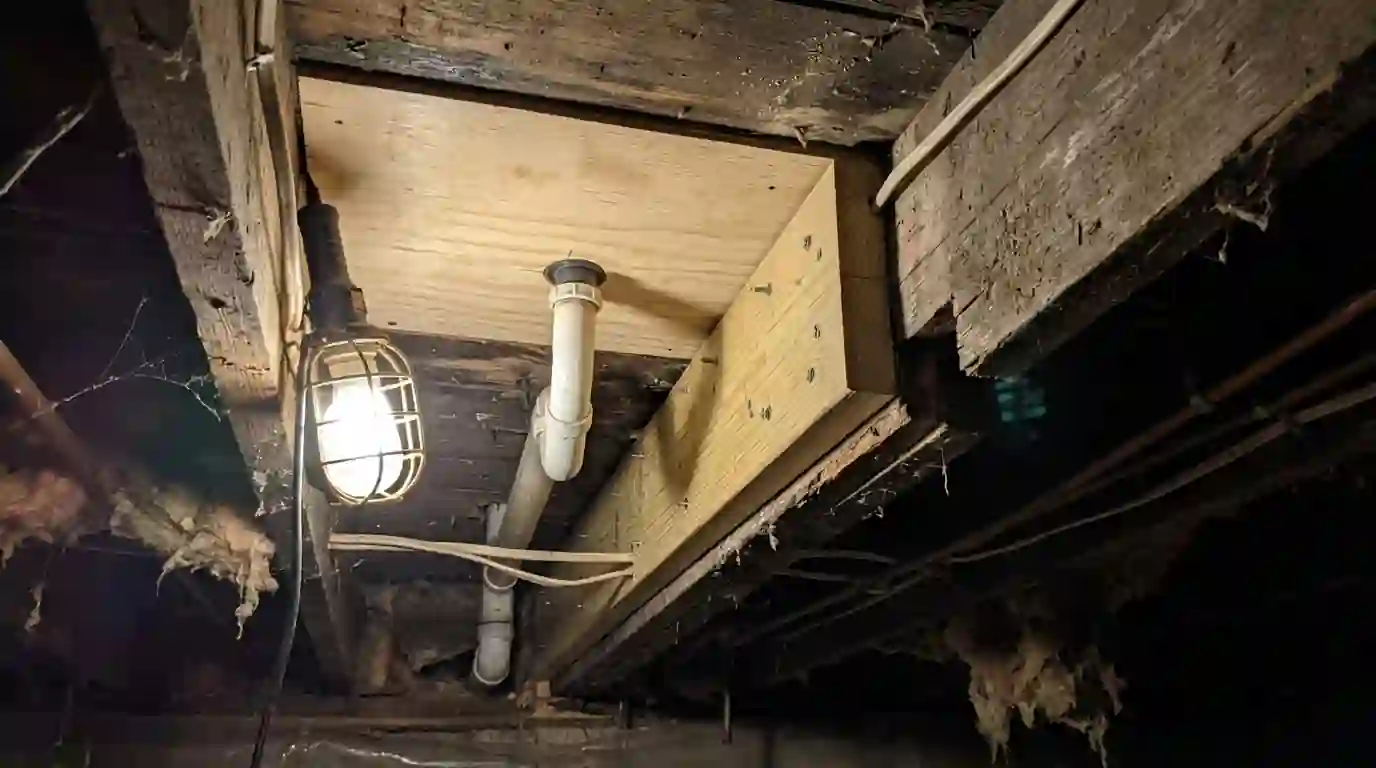
A cast iron or stone tub full of water puts a concentrated load on a few joists. If the house sits over a crawl space, we inspect those joists from below: their size, whether they were notched for old drain lines, and whether moisture has softened the subfloor. Notched or damaged joists get sistered or blocked before the tub goes in. A floor that flexes now will crack a new tub's finish or the grout around it later, so this is a step we never skip.
Call (336) 347-1995Want someone to look at your room? The phone is answered around the clock.
Remodeling this in Greensboro houses
A leaking tub feeds a North Carolina pest. NC State Extension says eastern subterranean termites are so common in the state that homeowners are almost certain to run into them, and they thrive on leaks and damp, poorly ventilated crawl spaces. Native subterranean termites swarm from late winter into fall, and swarmers or shed wings indoors usually mean an active colony in or under the house. When a tub comes out, we look for termite tunnels as well as rot.
Signs it is time to call
- The tub flexes when you step inGive or creaking means the bedding has broken down or the subfloor is soft.
- Cracks through the finishOnce acrylic or enamel cracks, water works under the tub.
- Caulk that keeps opening upA returning gap can mean the tub is settling.
- A stain on the ceiling belowA brown ring under the bath usually points to a failed overflow or drain gasket.
How we run the job, step by step
- Inspect tub, wall and floorWe check the tub, surround and framing below.
- Remove tub and lower surroundThe old tub comes out with the tile or panels that lock its flange.
- Repair floor and drainDamaged subfloor and joists are fixed, and the drain and overflow replaced.
- Set and levelThe new tub goes on a mortar bed or leveling base and is water-tested.
- Surround and sealNew tile or panels go up, and the tub edge gets flexible caulk.