Short answer
In Greensboro, refinishing hardwood costs $3 to $8 per square foot on HomeAdvisor's national figures, far less than replacing it, as long as enough wood remains above the tongue to sand. We check that first by pulling a floor register or threshold and looking at the board's edge.
Solid hardwood can be sanded several times over its life, and how many depends on the wood left above the tongue. We look at a register opening or threshold to see what remains, find nails and staples left by old carpet, and point out pet stains and cupped boards that will not sand out.
A full refinish means sanding to bare wood through progressive grits, edging along the walls, filling, staining if you want color and laying down finish coats. Furniture has to come out, and the rooms stay off-limits until the finish can take traffic. A screen and recoat is the lighter option when the wood itself is fine.
What moves the price of hardwood floor refinishing
Refinishing is priced per square foot, and the floor's condition decides where you land in the range.
- Full sand or recoat A screen and recoat costs far less than sanding to bare wood.
- Stain Color adds sample work and a drying day.
- Board repairs Each replaced board adds cutting and weaving.
- Stairs and edges Treads, risers and tight rooms take hand work.
| What the figure covers | Published range | Source |
|---|---|---|
| Hardwood refinishing, national | $3 to $8 per sq ft; $1,107 to $2,681 typical; average $1,892 | How Much Does It Cost to Refinish Hardwood Floors? - HomeAdvisor |
Published figures are averages from the sources named, not a quote. Your price comes after the walk-through.
Renting a sander yourself
Drum sanders are easy to rent and easy to gouge a floor with: pausing for a second leaves a dip that shows under finish. In a house built before 1978, painted edges or old coatings may contain lead, so test before sanding. A screen and recoat is the more forgiving DIY job; a full sand or color change is where professional equipment pays off.
A full sand and refinish to bare wood
Gray traffic lanes, deep scratches and finish worn through to raw wood call for a full sand. We start coarse to flatten the boards and remove the old finish, step through finer grits, then edge the perimeter and hand-scrape the corners. After vacuuming and tacking, stain goes on if you want color, followed by two or three coats of finish, sanded lightly between. HomeAdvisor's national data puts refinishing at $3 to $8 per square foot, with typical projects at $1,107 to $2,681.
Screen and recoat when the finish is only dull
If the finish is scuffed but the wear has not reached the wood, a screen and recoat brings back the sheen without sanding to bare wood. We buff the existing finish with a fine screen so the new coat bonds to it, then apply a fresh topcoat. It is quicker, cheaper and far less dusty. It will not remove deep scratches or change the color, and it does not work over floors that were waxed or treated with some polish products.
Changing the stain color
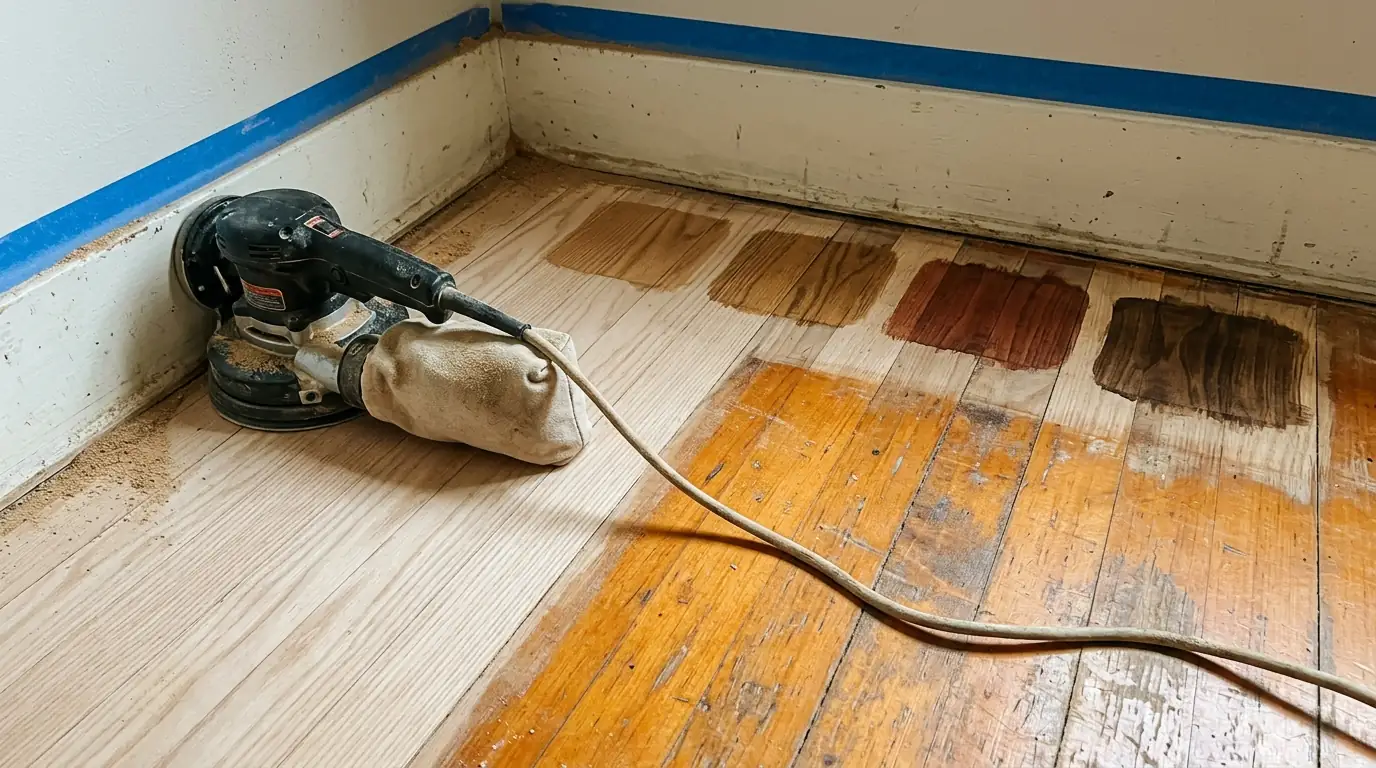
Going from orange-toned 1990s oak to a natural, gray or dark walnut look requires a full sand to bare wood. We brush several stain samples onto your actual floor, since the same stain reads differently on red oak, white oak and older boards. Darker stains show dust and scratches more, and very light looks may need a water-based finish to avoid the amber cast oil finishes give. Plan on the stain needing a day to dry before the first coat.
Pet stains and replacing damaged boards
Dark pet stains usually go deep into the wood and will not sand out. We cut out the stained boards and weave in replacements of the same species and width, then sand and finish them with the rest of the floor. The same applies to boards split by old nails or damaged by a leak. Lighter gray water marks sometimes lift with sanding, and we test one before deciding. Replacement costs more per board than sanding, so we mark the boards with you first.
Call (336) 347-1995Want someone to look at your room? The phone is answered around the clock.
Remodeling this in Greensboro houses
Greensboro's older streets hold a lot of floor worth saving. Preservation Greensboro notes that typical Westerwood homes, mostly 1920s bungalows and cottages, have hardwood floors, and floors that old have usually been sanded before, so we check what is left above the tongue. Fisher Park, a streetcar suburb of Prairie, Craftsman, Colonial Revival and Tudor homes that became the city's second local historic district in 1982, is another place where original boards carry the house's character.
How long you will be off the floor
A screen and recoat keeps you off the floor the shortest time, with one coat to dry. A full sand takes longer: sanding, stain drying if you choose color, then several coats with drying time between. Furniture goes back once the finish can handle it, and rugs wait longer still.
Signs it is time to call
- Gray traffic lanesThe finish is gone and the wood is soaking up dirt.
- Dark water spotsMoisture reached the wood; black marks rarely sand out.
- Splinters and raised edgesBoards have dried, cupped or been damaged.
- Finish flaking at doorwaysThe coating is failing where traffic is heaviest.
How we run the job, step by step
- Check thicknessWood above the tongue measured; boards to replace marked.
- Clear and seal offFurniture out; doorways and vents sealed.
- Sand and repairProgressive sanding, edging, board replacement and filling.
- Sample stainsColors tested on your floor before you choose.
- Finish coatsTwo or three coats with light abrasion between.