Short answer
If a Greensboro ceiling is stained, sagging or dripping, stop the water first: shut the fixture's supply valve or the main, turn off power to any light in the wet area, and puncture a bulging spot over a bucket. Then call us any hour. We cut out wet board, dry the framing and rebuild.
Signs it is time to call
- Brown ring or yellow stainWater has reached the board from above.
- Sagging or bulging ceilingWater is pooling on the drywall; keep clear.
- Bubbling or peeling paintMoisture is behind the paint, often a leak in the wall.
- Soft or crumbling boardThe gypsum has soaked and needs replacing.
- Musty smellSomething behind the wall has stayed wet.
How we run the job, step by step
- Stop the waterWe find the source and confirm the leak has stopped.
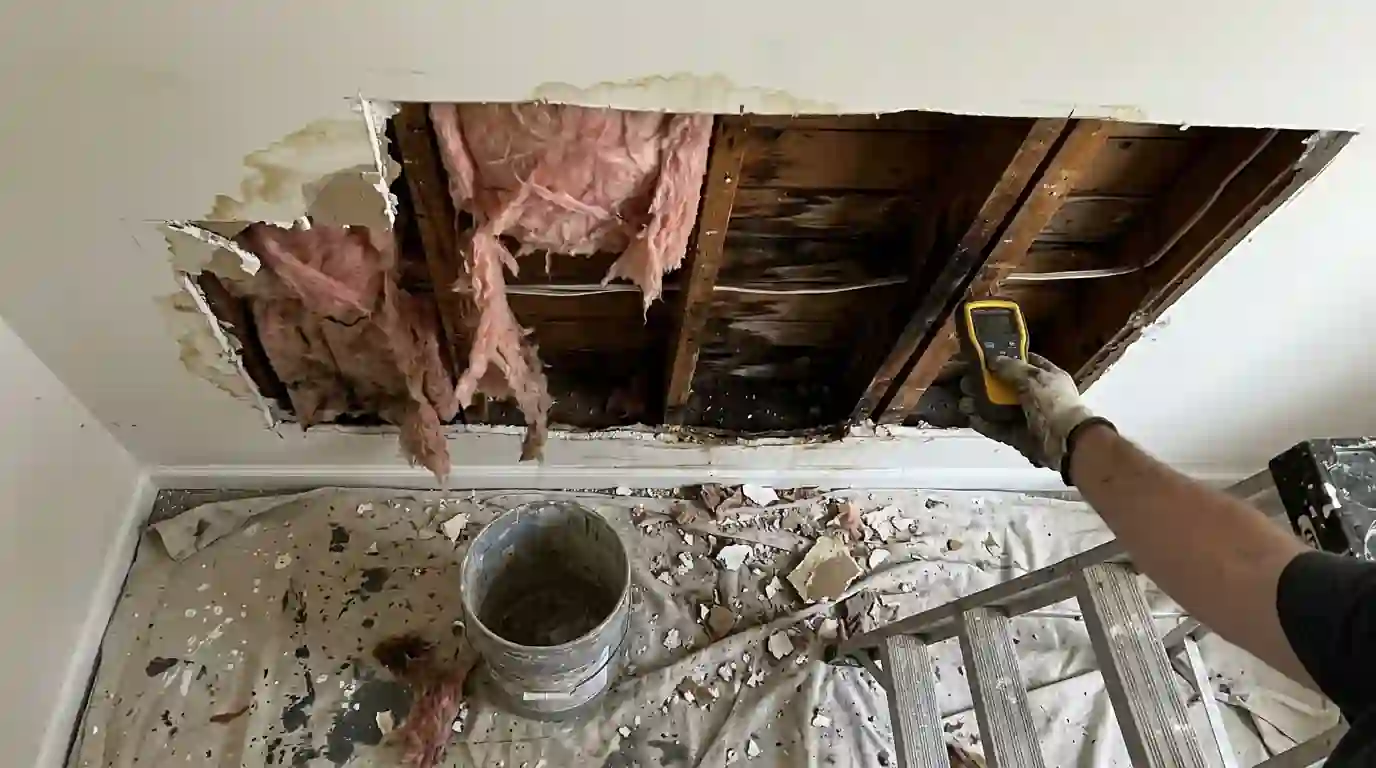
- Open and dryWet board and insulation come out; framing is dried.
- Hang and tapeNew board screwed off, taped and coated.
- Texture and primeTexture blended, patch primed.
- Paint the planeThe whole wall or ceiling painted so the repair disappears.
Wet drywall does not dry back to sound. Once the paper face and gypsum soak through, the board loses strength, and a ceiling holding water can come down. Mold grows in drywall and insulation that stay wet. So the first job after a leak is finding the source, then cutting out wet board so the framing can dry.
After that, the repair is ordinary drywall work done carefully: new board screwed to the framing, taped, coated several times, sanded and textured to blend with the room. We also handle everyday damage, from door knob holes and cracks over doorways to nail pops, plus full new walls in a remodel.
Water stains on the ceiling
A brown ring on the ceiling means water reached the drywall from above: a bath, a supply line, an HVAC drain pan in the attic or the roof. We find and stop the source first, then press on the stain. If it is firm and dry, a stain-blocking primer and ceiling paint finish it. If it is soft, sagging or still damp, we cut out the board past the wet area and replace it. HomeAdvisor's national figures put drywall repair at $296 to $930.
Holes, cracks and nail pops
Small holes from door knobs or anchors get a patch and three thin coats. Cracks that keep returning at the corners of doors and windows usually mean the framing moves with the seasons, so we tape them properly instead of filling with compound alone. Nail pops, the round bumps along framing lines, come from fasteners backing out as lumber dries; we drive a screw beside each one, reset the nail and patch. HomeAdvisor lists small hole repairs at $20 to $120 nationally.
Getting a patch to blend with the texture
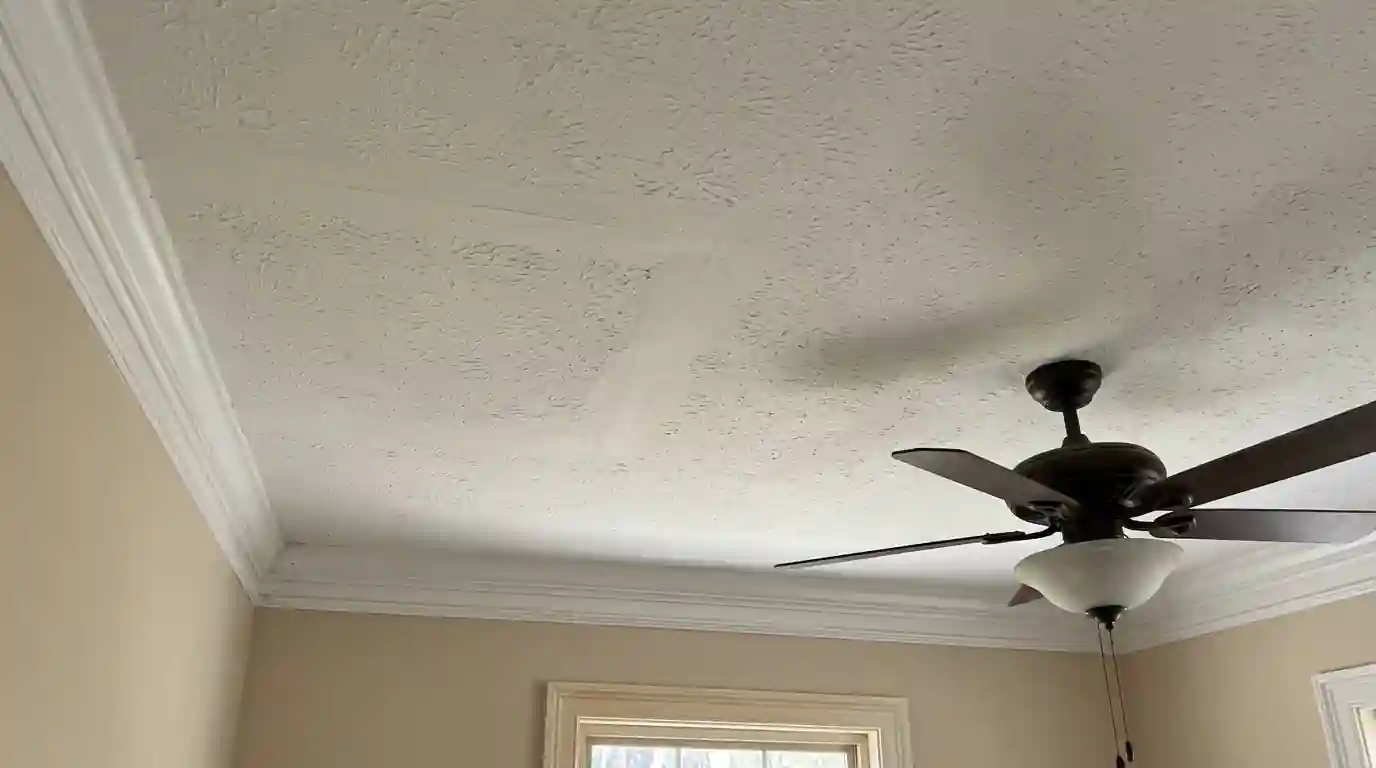
A smooth patch on a textured wall shows from across the room. We identify the texture first, whether orange peel, knockdown, skip trowel or popcorn, and test our method on a scrap of board before touching the wall. Spray pressure, knockdown timing and back-rolling are adjusted until the patch disappears into its surroundings. Older popcorn ceilings get tested before we disturb them. After texturing, the whole wall or ceiling plane is painted, so the sheen reads the same edge to edge.
Hanging new drywall in a remodel or rebuild
New walls in a remodel, a finished bonus room or a water damage rebuild get full sheets hung to keep seams few, screwed on the right pattern and finished to the level the room needs. Moisture-resistant board goes in baths and laundry rooms, and cement board goes behind tile in wet areas. HomeGuide's water damage guide puts drywall at $1.50 to $3.50 per square foot nationally. Insulation and electrical inspections, where required, happen before the walls close, and we schedule so no board goes up early.
What you can patch yourself and what to leave
Nail pops and small holes are reasonable DIY: a patch kit, thin coats and patience between them. Leave water-damaged ceilings to us, because a wet ceiling can fall without warning. In a house built before 1978, test the paint before sanding a large area. New wiring or plumbing inside a wall may need a permit and inspection before it is closed.
Remodeling this in Greensboro houses
Many Greensboro houses are old enough that a drywall repair can turn up older materials. ACS data compiled by Point2Homes puts about 42.7 percent of the city's housing before 1980, and the City with UNCG has run a HUD-funded Lead Safe Housing Program for pre-1978 homes where young children live or visit. When we cut into painted walls or ceilings in a pre-1978 house, we test the paint first and contain the dust. In plaster houses we repair the plaster where we can.
What moves the price of drywall repair
National figures from HomeAdvisor and HomeGuide frame the job; the wet area's size and the texture decide the price.
- Size of the damage A door knob hole costs a fraction of a ceiling replacement.
- Ceiling or wall Ceilings are slower and messier to patch.
- Texture Knockdown and popcorn take more steps than smooth.
- Leak and drying The leak is fixed and framing dried before new board.
| What the figure covers | Published range | Source |
|---|---|---|
| Drywall repair, national | $296 to $930; average $613; small hole $20 to $120; whole wall $500 to $1,600 | How Much Does Drywall Repair Cost? - HomeAdvisor |
Published figures are averages from the sources named, not a quote. Your price comes after the walk-through.